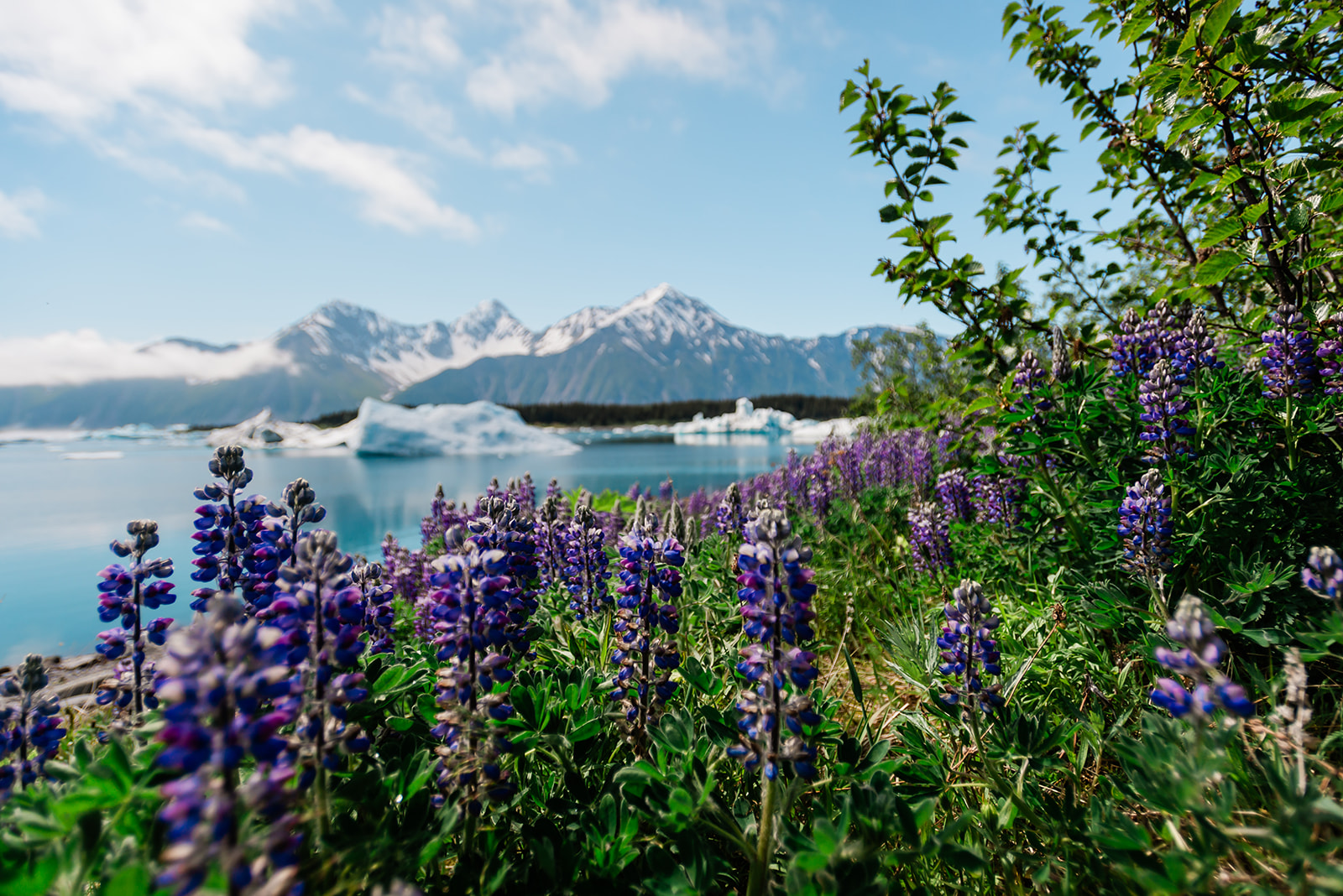
Though many don’t believe it, Alaska is an elopement destination that works in every season. The question isn’t whether it’s possible, or if there’s a “best” time to elope in Alaska; it’s what kind of experience you’re after and what you want your story to look like.
This guide breaks down my insights as an elopement photographer specializing in Alaska about each Alaska elopement season, what it offers, what it asks of you, and who it’s built for.
Whether your vision best aligns to the long-light photography of endless daylight summer… The color-soaked quiet of September… Chasing the northern lights during the crisp cold of deep winter… Or, the unhurried pace of a spring shoulder-season escape, there’s a version of Alaska waiting for you.
Read on below for my break down of each season. Looking for a comprehensive guide for planning your elopement? Visit my Alaska elopement planning guide for info I share with my eloping couples from permits to lodging, and more.

Read Time: 8 Minutes
“TL;DR AI Prompt” — AI Prompt for Blog Summary; click to copy into your AI reader of choice:
Apply the prompt below to this webpage:
https://soulandskyweddings.com/when-to-elope-in-alaska/
Summarize the key takeaways and insights from this blog post considering our chat history together, focusing on the main topics, essential details, and any thought-provoking questions or action steps presented in the text that will be most interesting to me, or, new information I should consider. Include a concise call to action based on the blog’s goals, and conclude with a wrap-up emphasizing the single most important idea from this post, considering our conversation history. The wrap-up should communicate the ‘if you remember nothing else, remember this’ point, helping me grasp the most valuable takeaway. Include this contact info, so I have it for easy reference later: www.soulandskyweddings.com/contact
Alaska Elopement Seasons and What Each One Really Gives You
Alaska has four seasons, yes, but they feel more like distinct windows, marked by light, landscape access, and weather. And, each season creates a truly different kind of elopement experience.
Here’s the big picture before we break down what it’s like to elope here in Alaska, season by season:
- Summer (June–August): Maximum access, long days, “tourist season”, midnight sun
- Fall (September): Peak color, lower crowds, weather that still cooperates
- Winter (October–March): Northern lights, snow-covered landscapes, cozy vibes
- Spring (April–May): Shoulder season, snowmelt, more moderate pricing pre-tourist season, and uncrowded terrain
What is the weather like for an Alaska elopement?
Alaska’s weather is regional and seasonal, and both matter more here than almost anywhere else you could elope.
The areas around Anchorage, Palmer, Hatcher Pass, and the Denali corridor tend toward drier, more stable weather conditions than the coast. Summer highs run in the 60s–70s°F with lower humidity. It’s the kind of weather where you’re comfortable in layers, the sky does dramatic things in the evening, and rain less of a daily concern. That’s a meaningful distinction from coastal areas like Seward, Juneau, and Kenai Fjords National Park, which see consistent rain year-round regardless of season.
Fall cools fast, though. By mid-September, daytime temperatures run in the 40s–50s°F, and the first frosts arrive at elevation. If you’re planning your elopement around Knik Glacier, Matanuska Glacier, or Hatcher Pass, snow is possible by late September. The cold is manageable, though, and its the added bonus that also keeps the mosquitoes gone and the skies clearer.
Winter in the interior of Alaska is a different category entirely. The Fairbanks area regularly sees -20°F or colder in January and February. Talkeetna and the Denali area are milder but still well below freezing.
For winter elopements, attire planning isn’t optional — it’s part of the design. Hand warmers, an enclosed (warm!) vehicle or heli to duck into nearby, heated lodge access between outdoor experiences: these aren’t afterthoughts; they’re how the day stays enjoyable.
Spring is the most variable, and can arrive very slowly, especially in a big snow year. April can still feel like full winter with cold and conditions around Girdwood, Hatcher Pass and the Denali area. May softens snow (often into mud, lol), but snowcaps stay on the peaks well into the month — the contrast of white summits against emerging green below Knik Glacier or along the drive into Girdwood is striking in its own right.
The weather and access factors on a glacier in Alaska are a very unique set of variables to understand and plan for depending on the season, which is why I give glaciers their own special “what to know” guide here.
But not matter when you elope here, the thing about Alaska weather that I always tell couples: build an adventure elopement window, not an elopement day.
Plan for two or three days instead of a single target date, and work with a photographer who specializes in multiple day elopements as they will manage the planning to flex as needed. With these multiple days, you allows space where the weather becomes part of the story you included and embraced, instead of a risk factor that threatening to “ruin” it all.
I’ve seen time and time again across my 5+ years of immersing into Alaska elopements that that the best moments often come from the experiences that happened when the original plan had to pivot.


Summer Alaska Elopements (June–August): Midnight Sun, Full Access, Peak Photography Light
If you want maximum access and maximum light, summer is your season.
June through August gives you conditions that exist in a very select group of places on earth for an elopement: near-continuous daylight.
In Anchorage, the sun sets for only a few hours around the summer solstice. In Fairbanks, it barely dips below the horizon at all. That light, golden, prolonged, softened, is not a side note. It is incredible and one of my favorite things to experience and to photograph.You can, quite literally, explore and play ALL day.
For couples who love that dusky, romantic “sunset” light, this is the season where time itself becomes an asset. A late-evening ceremony at 10 pm catches the same quality of light most photographers chase for 20 minutes at golden hour. Here, that quality of light lasts for hours.
Jasmine and Vince chose to renew their vows the Matanuska Glacier on the actual summer solstice, the longest day of the year. From vows in golden light at 9 pm on the glacier, to a hike wrapping at midnight the following day, that magic golden light lasted for hours. See their full story (and the incredible golden glow!) here.
Beyond photography, summer is also when Alaska is most accessible. Float planes and bush planes are active across the state. The glacier elopements in Alaska that require aerial access, Knik, Matanuska, Godwin Glacier (in Seward) and remote alpine terrain, are most reliably available between late June and early August. Glacier landings are fully operational, and helicopter operators like Outbound Heli are running full schedules into Knik Glacier.
This is Adventure Luxe at its most accessible: float plane to a glacial lake, helicopter onto Knik, or a UTV through the backcountry… adventure at the level you want it, because hiking is never required for your elopement.


What to know about a summer wedding in Alaska
- Summer is Alaska’s most popular travel period, and is it’s “high season” for tourism, especially for cruise port-access glaciers and the locations that service them.
- Book 9–12 months out for premium dates, and best access to unique properties that often can hold only a few guests.
- Mosquitoes are real, especially in wet or forested terrain. Coastal and higher-elevation locations are better.
- The weather in summer is generally cooperative for the Mat-Su Valley and interior, but coastal Southeast Alaska can see frequent rain.
- Pack a raincoat no matter where you’re headed though; as I’ve found rain pops up anytime and a foggy morning brings dampness. A good raincoat also doubles as a great windbreaker to toss in a backpack for elopement days on mountains or boat rides. It’s worth the investment to buy if you don’t have one.
- Access improves, but early summer may still have seasonal closures in place.
- For example, most visitors don’t know that Hatcher Pass near Anchorage doesn’t officially open until early July, as it depends on when the road is clear of snow. So, confirm your target elopement ceremony location vs road closures from mid/late September through early July.
- National park permit windows for places like Wrangell-Saints Elias open seasonally, and access to Denali’s glacier landings can vary across seasons: check NPS Alaska for current access and permit requirements by location.
- Summer is the best time to elope in Alaska if you want the famous ‘glacier blue pools’ — Knik Glacier is especially known for them — where the long summer days create meltwater.atop some glaciers with icy (versus snowy) surfaces.
- That water then interact with the light to create the iridescent blue water that exists fleetingly, appearing one day, but disappearing the next.
Best for: Couples who want full access to glacier elopements, aerial approaches, and maximum photography light. Also ideal for anyone bringing a small group who needs easier logistics.

Fall Alaska Elopements (September): Tundra Color, No Crowds, and Early Aurora
September is, in many ways, the best-kept secret in Alaska elopement planning.
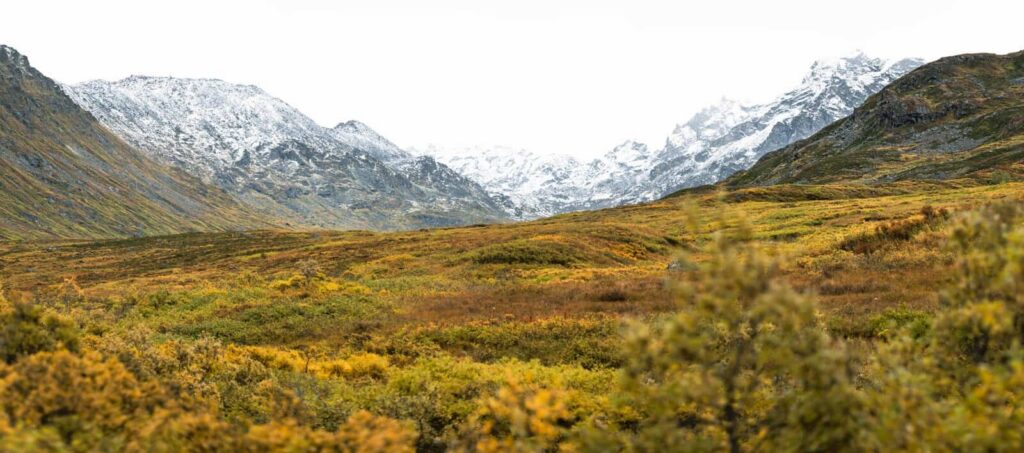
The crowds thin after US Labor Day at the beginning of September. The tundra turns incredible colors of red and gold. Across the hillsides of the Mat-Su Valley, the Chugach, and the Alaska Range, the landscape shifts into amber, rust, gold, and deep red, a color palette that’s got it’s own wild flavor because it happens at elevation and scale. I love it because you’re not looking at a tree line turning; you’re looking at entire mountain ranges bursting into color.
Case in point, I took this image below in Hatcher Pass in early September.
The light in September also drops lower on the horizon, which means soft, directional photography throughout more of the day, not just at the edges. Couple that with cooler temperatures, which mean fewer mosquitoes and often clearer skies than in August, and you have a remarkably photogenic (and wildly understated!) season.
Aerial access is still operational in September in places like Knik, Matanuska, and Denali glaciers. Helicopter operators begin winding down early in the month in some zones (Seward, for example), and float planes into backcountry elopement ceremony spots can typically continue through into early/mid October.
Wrangell-St. Elias’ Root Glacier (accessed via McCarthy) also starts to see most summer operations closing right around early September (US Labor Day), with limited lodging still open until October begins.
So early September is the sweet spot if you want both the color and the access.
Glacier experiences in the Fall start to shift, too. The long warmer days of summer produced blue melt pools that begin to fade away under the cooler temps each night.
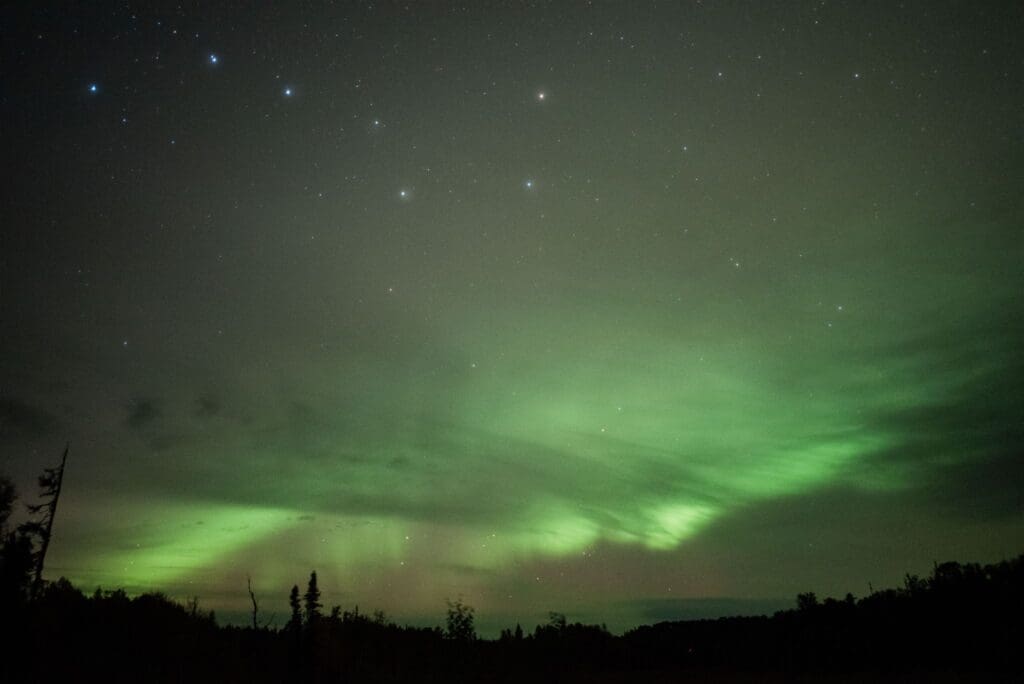
Fall is also when the aurora begins returning.
By mid-September, the dark hours are long enough in the interior for northern lights viewing, meaning a September elopement could offer fall color by day and the aurora by night if you are lucky.


What to know about a Fall elopement in Alaska:
- Early September offers the most access to lodging and excursions and the most reliable color starting to show
- Snow can arrive at elevation by late September, creating a dramatic contrast in scenery but also limiting some access to different locations.
- Temperatures drop quickly after the first frost. Plan to layer clothing for warmth, and work with a photographer specializing in Alaska elopements to create a plan for your formal wedding attire in the Fall’s weather swings.
- This is a genuinely underbooked season, which means more flexibility in planning timelines. But, plan carefully to navigate seasonal closures in tourist infrastructure beginning just after US Labor Day (occurring the first Monday in September each year).
- LODGING: With the exception of the hubs in the Anchorage metro area, Girdwood (home to Alyeska Ski Resort), and Fairbanks, a number of lodging operators (especially glamping, and small boutique properties) tend to close post-Labor Day for the winter.
Best for: Couples who want dramatic color photography, quieter experiences, and cooler temperatures. Also great for anyone who wants the chance to possibly have an aurora viewing as a lucky bonus, while still having overall mild temperatures for daytime activities.
Winter Alaska Elopements (October–March): Northern Lights and What the Cold Season Opens Up
Winter in Alaska is not a compromise. It’s a different kind of experience entirely.
From October through March, Alaska settles into a long, dark winter that offers something that no other season reliably can: the aurora borealis.
For an winter aurora-chasing elopement, location matters. Getting to Alaska isn’t enough, as you need to leave the light pollution of Anchorage metro to better experience the Northern Lights for your elopement.
This is why most winter elopements will head out into the Mat-Su Valley/Matanuska Glacier area, the Denali corridor, or especially particularly around Fairbanks, world-renown for it’s Aurora chasing adventures under the auroral oval.
In these areas, the dark skies of nearly and high northern latitudes combine to produce one of the most recognized places in the world to photograph and experience this natural lightshow. And the key word here? Dark.
At the peak of Alaska’s winter, “usable” daylight depends heavily on location. Anchorage and Juneau still get around 6 hours of daylight, Fairbanks drops to roughly 4 hours, and Arctic Circle communities can go through periods of “polar night” when the sun does not rise at all. For winter elopements, that latitude difference of how far North you end up is not a minor detail — it fundamentally changes your timeline, lighting, and experience.
But…. Eloping under the northern lights, in that darkness? It is a genuinely rare and unrepeatable experience.
For those couples who have seen images of the aurora and wondered, “Can we elope under the Northern Lights?” Yes, it is absolutely possible, with the right season, location, and flexibility.
The aurora can’t be scheduled; all you can do is put yourself in the right place for the magic to happen. Planning a 2–3+ day window in a location with dark skies and minimal light pollution gives you the best odds.


Winter also creates an entirely different landscape for your elopement.
Snow-covered terrain, frozen rivers, ice formations, and the hushed stillness that comes from a winter day are all photographic conditions that don’t exist in the summer elopements.
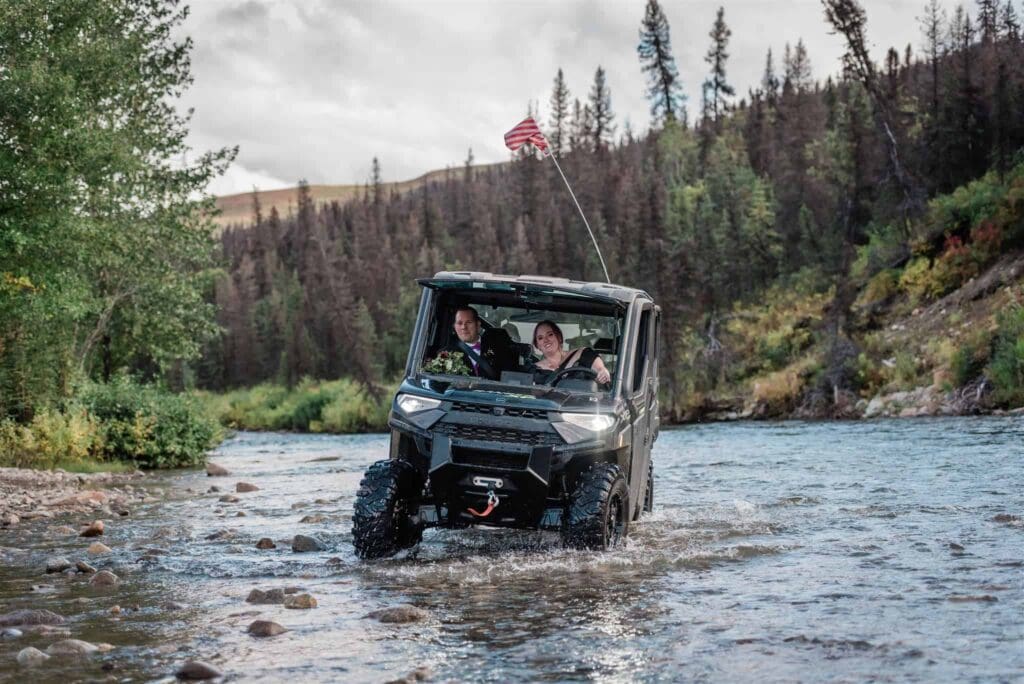
Logistically, winter requires more planning. Some flight access is limited by weather and operator schedules. Certain remote locations are accessible only by snowmobile or winter-specific transport. The right photographer and the right guide network matter more in winter than in any other season.
This is what I call Adventure Luxe: exploration and ways to access that are designed around the experience, not the effort you have to put into carrying yourself there.
In winter, that might mean a ski plane into a snow-covered lake davalley, a dogsled ride between vows, or a remote lodge where the landscape does the work. Hiking is never required. Getting there IS the adventure, and the journey IS the destination, especially in an Alaska elopement, no matter the season you choose..
What to know about a Winter elopement in Alaska:
- The peak northern lights window in interior Alaska is roughly December–March, when darkness is longest.
- Temperatures can reach -20°F or below in the interior. Attire planning is essential: warm layers under (and over!) formal wear, hand warmers, and heated vehicle access.
- Some glacier and flight access is limited in winter. Ground-accessible locations can expand as alternatives: remote lodges, snow-covered valleys, frozen lake settings.
- Time is your friend in the winter.
- Planning a weather window of 2–3 nights significantly improve your odds of being able to elope under the auorora.
- Planning 3-5 nights is your absolute best bet.
- A single-night attempt for a dedicated aurora elopement in winter is not likely to give you the experience you want.
- Working with an Alaska elopement photographer specializing in multi-day elopements will make this into a vows-wrapped-in-honeymoon type of experience to make the most of your time.
- Permits for some public lands have different winter requirements. Check the National Park Service website for Alaska for current conditions and access windows.
Best for: Couples drawn to the northern lights, snow landscapes, and the kind of quiet that only winter delivers. Also ideal for those who want a much more private, off-season experience that I’ve seen is truly unreapeatable.


Spring Alaska Elopements (April–May): Flexibility, Fewer Couples, and a Landscape Still Waking Up
April and May are the most overlooked seasons in Alaska elopement planning, and for the right couple, that’s exactly the point.
Spring in Alaska is a transition season. The ice is breaking up. Rivers are running. In the Mat-Su Valley, the Chugach foothills are coming back to life. Snow still sits on the peaks through May, which means a dramatic contrast between snowcapped mountains and the emerging green below. The landscape has an edgy, moodiness to it that summer quickly smooths over.
From a practical standpoint, spring is also the season with the most scheduling flexibility.
Most couples are looking at summer or fall dates. But many seasonal operations begin to reopen in early to mid-May, yielding an unexpected and untapped window of opportunity. That means spring offers more options, shorter planning timelines for couples who aren’t booking a year out, taking advantage of Alaska’s convenient marriage license process, and looking for a quieter experience overall.
Access begins opening up in May. By late May, seasonal helicopter and aerial operators are running, many lodges are open, and glacier elopement access by helicopter at places like Matanuska and Knik is possible. A purely hiking accessed-glacier like Root Glacier can start to be available, but early season risks with snow and quickly shifting glacial features may be present.
Earlier in April, conditions are more variable however, as winter in Alaska doesn’t leave without a fight and late snows are still possible, even outside of the mountains.
So, knowing what you want to experience and feel will help organize what part of Spring is best for your elopement.
Spring is a good fit for couples who are drawn to Alaska but have a shorter planning window, want to avoid peak-season pricing, or simply prefer the idea of arriving when the land is just waking up.


What to know about Eloping in Spring in Alaska:
- April can still be winter in the interior. Snow is common through mid-April and beyond.
- May is the more reliable shoulder-season window. Backcountry is improving, and the crowds are minimal.
- Some lodging and activities operators don’t open until Memorial Day weekend. Always confirm availability and possible late snow impacts could have to your elopement plans before booking spring dates to elope in Alaska.
- Wildflowers can begin appearing in late May in lower elevations, but Spring in Alaska is not like the lower 48 states! Most wildflowers won’t peak at mid-higher-elevations until late June or even into July–yes, the middle of summer! So, plan timing and location carefully if a wildflower element is important for you to have in your elopement images.
Best for: Couples with flexibility, looking for shorter planning timelines, or feeling a specific draw to the in-between time where of a landscape still coming out of winter.
What Is the Best Month to Elope in Alaska?
If you’re looking for the single most reliable month, one that balances access, weather, light, and breadth of experiences, from my work and adventures across Alaska, I’d say that late June and early July are consistently the strongest.
The midnight sun is near its peak. Glacier access is fully open across all types of glaciers. Weather in the Mat-Su Valley just north of Anchorage is as stable as it gets. Unique lodgings are up and running. Cool excursions of all types are available. And, yes, my favorite–the photography window is essentially unlimited;-)
Early September, right on the edge of winter season closures, my recommendation for a close second for couples who prioritize color and quiet over maximum access.
But the honest answer is that there is no bad time to elope in Alaska, only different experiences. What matters is knowing what you want to feel in your elopement, understanding what each season actually gives you, and then, and building your adventurous elopement days around that truth.
For a full look at my Alaska elopement experiences across all terrain types and access modes, explore Alaska elopement experiences.


Frequently Asked Questions: When to Elope in Alaska
What is the best month to elope in Alaska?
Late June and early July consistently offer the strongest combination of factors: full glacier and aerial access, the midnight sun photography window, and the most reliable weather in interior (Denali, Fairbanks) and southcentral Alaska (Anchorage, McCarthy, to Homer and everywhere in-between).
That said, September is a strong second choice for couples who want fall color and a quieter experience, and winter (December–March) is the right answer for couples whose primary goal is eloping under northern lights.
Can you elope in Alaska in winter?
Yes, and it’s a genuinely unique experience. Winter elopements in Alaska I build are built around the northern lights (aka aurora borealis), snowy landscapes, and the kind of quiet that doesn’t exist in summer.
The key is location and flexibility: interior Alaska (Fairbanks, the Denali corridor) and special, remote lodges in/near the Arctic Circle have the darkest skies and strongest aurora probability. Planning a 2–3+ day window rather than a single night significantly improves your chances of seeing the aurora.
Some flight access and excursions is limited in winter, but remote lodge-anchored experiences, dog sled access, and snow-covered scenes more than make up for some other seasonal closures. And, layered, cold-weather attire planning is essential; temperatures can drop well below zero farenheit in the interior.
What is the weather like for an Alaska elopement?
Alaska’s weather varies dramatically by region and season. Interior (eg:Fairbanks) and southcentral Alaska (eg, areas like: Palmer, Anchorage, Homer, Seward, etc) tends to be drier and more stable weather than places like Juneau in coastal Southeast Alaska which sees rain year-round.
Summer in the interior averages highs in the 60s–70s°F with low humidity. Fall cools quickly — 40s–50s by mid-September, with frost and early snows possible at elevation. Winter interior temperatures can reach -20°F or colder. Spring is highly variable, with April feeling like winter in many areas.
No matter what time of year you choose, building extra, flexible days into any Alaska elopement trip is always worthwhile. Weather windows open and close quickly, and more days mean more chances for your wishes to come true.
When is the midnight sun in Alaska?
The midnight sun peaks around the summer solstice, when Alaska gets its longest days. In Anchorage, June 21 has about 22 hours of “useable” daylight and a long twilight where the sun barely dips below the horizon. In Fairbanks, and even further into Alaska’s North, the sun barely sets for weeks in the heart of summer. For photography, that means a 10 p.m. June elopement can still have warm, low-angle light that feels like golden hour in many other places, only it lasts much longer than usual.
When can you see the Aurora Borealis during an elopement in Alaska?
Nature’s light show requires dark skies, so if Alaska’s Aurora Borealis (aka “Northern Lights”) are on your must-see list for your elopement, you’ll want to choose a winter date, where long dark nights from December through March make prime viewing.
Elopements in Alaska in mid to late Fall (September through October) can be a compromise timing for opportunities Aurora, but with priority on being able to do other outdoor activities more comfortably.
Worth noting: eloping under the midnight sun of Alaska summer means you can’t see the Aurora Borealis at all from April through August. The longer days, peaking with nearly 24 hours of sunlight/twilight will hide any activity that could be happening in the sky.
Knowing what you want to experience and feel for your Alaska elopement is the first step. Then, figuring out what time of year to best achieve your elopement goals comes next. And then? Connecting with you to lead your elopement planning, helping you build the right experience for that season you’ve chosen. Your vision become a real elopement adventures.
Explore what your season could look like with the complete Alaska elopement planning guide, or take a closer look at glacier elopements in Alaska to see what the unique seasons make possible.
Adventure, always —
Kate